

Thomas & Chess on behavioral individuality

Adult temperament

Raising Your Spirited Child

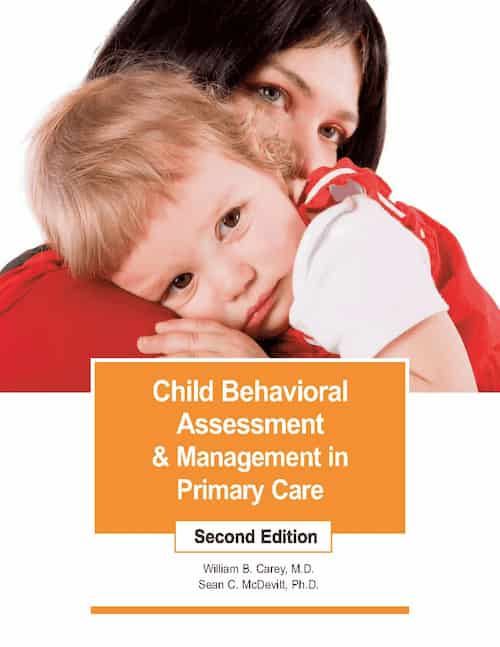
CBAM2: 2016 Edition
Things to do at this site


Thomas & Chess on Behavioral Individuality
Alexander Thomas and Stella Chess discuss temperament qualities in children.
What's New at B-DI

What's New at B-DI
 OTC 25, Texas A&M, College Station, TX
Jeff Liew and the OTC 25 organizers have posted a detailed summary of the recent meeting at Texas A&M.
Summary of the 25th Occasional Temperament Conference (OTC25)
The 25th Occasional Temperament Conference (OTC25), held November 6–8, 2025 at Texas A&M University, convened leading research scholars and practitioners to explore temperament across genetic, cultural, educational, and clinical contexts. Organized by JeKrey Liew, Rebecca Brooker, JeKrey Gagne, Jun Wang, and Zhe Wang, the program balanced methodological innovation with applied practice, while honoring the longstanding legacy of this conference. The conference drew more than 100 registrants with presenters from over 40 institutions and at least 10 countries, highlighting the global scope of temperament scholarship.
Preconference sessions November 6, 2025) emphasized both research methods and applications of temperament. Session A: Innovative, Rigorous, and Equitable Research Methods in Temperament Research was chaired by Amanda SheKield Morris (Oklahoma State University) and Elizabeth Planalp (University of Wisconsin–Madison), featuring Koraly Pérez-Edgar, Samuel Putnam, and JeKrey Gagne. Session B: Temperament in the School & Classroom Contexts was chaired by Kathleen Moritz Rudasill (Virginia Commonwealth University), with panelists Sandee McClowry, Robert Pianta, Erica Ritter, and Carlos Valiente. A welcome reception followed.
Day One of the conference (November 7, 2025) began with opening remarks by JeKrey Liew (Chair of the OTC25 Organizing Committee and Department Head of Educational Psychology at Texas A&M University) and Michael A. de Miranda (Dean of the College of Education and Human Development at Texas A&M University) before the opening keynote address by Xinyin Chen (University of Pennsylvania) on temperament and socioemotional development in cultural contexts.
• Symposium A: Genetic and Neurobiological Aspects of Temperament, chaired by Kathryn Lemery-Chalfant (Arizona State University), highlighted maternal wellbeing, EEG coherence, and gene–environment links and included 4 presentations.
• Symposium B: Temperament in Adjustment and Psychopathology, chaired by Liliana Lengua (University of Washington), examined reactivity, social anxiety, depressive symptoms, and longitudinal trajectories and included 4 presentations.
• Symposium C: Sociocultural, School, and Family Contexts, chaired by Nicole Perry (University of Texas at Austin), addressed maternal beliefs, depression, parenting, and media use and included 4 presentations.
Day One of the conference concluded with a poster session at the MSC Stark Gallery, showcasing 28 poster presentations.
Day Two of the conference (November 8, 2025) Saturday’s symposia extended the scope of temperament research:
• Symposium D: Fear, Shyness, and Withdrawing or Internalizing Behaviors, chaired by Daniel Ewon Choe (University of California, Davis), oKered cross-cultural perspectives on shyness and adjustment and included 3 presentations.
• Symposium E: Temperament Applications in Childcare, Education, and Clinical Practice, chaired by Sean C. McDevitt (Behavioral-Developmental Initiatives), featured preventive guidance, school readiness interventions, and temperament-informed programs and included 4 presentations.
• Symposium F: Temperament during Prenatal, Infant, and Early Childhood Development, chaired by Cynthia L. Smith (Virginia Tech), examined surgency, eKortful control, sleep, and early cognitive development and included 4 presentations.
• Symposium G: Temperament and Personality Across the Lifespan, chaired by Katherine Lawson (Rhodes College), presented longitudinal findings on behavioral inhibition, personality development, and trait continuity and included 4 presentations.
The conference culminated in a gala dinner, where the Jan Kristal Award honored Kristin A. Buss (Penn State) and Lori L. Korthals (Iowa State). The closing keynote by Martha Ann Bell (Virginia Tech) on temperament foundations of early cognitive development.
In sum, OTC25 underscored the interdisciplinary richness of temperament research, integrating genetic, neurobiological, cultural, and applied perspectives. With over 100 attendees and representation from over 40 institutions and at least 10 countries, the conference showcased the collaborative spirit and global relevance of temperament scholarship and applications.
All details, including the conference programs, can be found here:
https://otc.education.tamu.edu/The 24th Occasional Temperament Conference (OTC) was held at the Manoir des Sables, Orford, Québec, October 5-7, 2023, in a joyful atmosphere and an idyllic natural setting. It was the first time OTC was presented in Canada. Dr. Jean-Pascal Lemelin (Program Chair) and Dr. Yann Le Corff (Program Co-Chair), from the University of Sherbrooke, Dr. Annie Bernier (Program Co-Chair), from the University of Montreal, and Dr. Nicolas Berthelot (Program Co-Chair) from the University of Québec at Trois-Rivières, hosted the conference with the assistance of Florence Paillon, Mylène Villeneuve Cyr, Geneviève Rivard, Kim Deschênes and Geneviève L’Écuyer.
The 24th OTC attracted over 140 participants from all over the world, making it one of the most attended editions since these meetings were put in place. The scientific program included 4 preconference workshops, 7 symposiums including a total of 40 oral presentations, and 47 poster presentations, fueling reflections and stimulating discussions among participants.
Themes of the workshops (and their respective leaders) were: Latent Profile Analysis in Temperament Research (Roy Martin, University of Georgia); Caring for the Spirited Child (Sean McDevitt, Behavioral-Developmental Initiatives); Hippocrates Revisited: Neurochemical Biomarkers of Temperament and Psychopathology (Irina Trofimova & William Sulis, McMaster University); A Preconference on New INSIGHTS (Sandee McClowry, New York University).
Themes of the symposiums (and their respective chairs) were: Adversity, vulnerability, psychopathology, and temperament (Kirby Deater-Deckard, University of Massachusetts Amherst and Santiago Morales, University of Southern California); Neuroscience, biology, and temperament (Martha Ann Bell, Virginia Tech); Social relationships, parenting, and temperament (Tracy Spinrad, Arizona State University); Practical and clinical applications of temperament (Sean McDevitt, Behavioral-Developmental Initiatives); Temperament in the school context (Kathleen Rudasill, Virginia Commonwealth University); Development and measurement of temperament (Koraly Perez-Edgar, Pennsylvania State University); Culture, gender, and temperament (Samuel Putnam, Bowdoin College).
The event featured two prestigious keynote speakers. Dr. Nancy Eisenberg, Emeritus Professor at Arizona State University, who was introduced by Dr. Cynthia Smith (Virginia Tech University), offered the participants a very comprehensive address around the construct of effortful control, entitled “Top down self-regulation in children: Conceptualization, operationalization, and correlates”. Dr. Jennifer Tackett, Editor-in-Chief for Clinical Psychological Science and professor at Northwestern University, who was introduced by Dr. Sarah De Pauw (Ghent University), contributed an exciting presentation centered on leadership entitled “Who are the Game Changers? Why We Need to Study Leadership in Childhood and Adolescence”.
Three Jan Kristal awards were awarded before the gala dinner to Dr. Masha Gartstein (Washington State University), Dr. Kathleen Rudasill (Virginia Commonwealth University) and Dr. Patricia McGuire in recognition for their distinguished contributions to the application of temperament theory and measures for the welfare of children.
The event was supported by the Université de Sherbrooke, the Université de Montréal, and several research groups of which the program chair and co-chairs are members: Le Groupe de recherche et d’intervention sur les adaptations sociales de l’enfance (GRISE; Group for Research and Intervention on Children’s Social Adjustment; https://grise.ca/), le Centre de recherche universitaire sur les jeunes et les familles (CRUJeF; https://www.crujef.ca/) et le Groupe de recherche et d’intervention auprès des enfants vulnérables et négligés (GRIN).
All details, including the conference programs, can be found here:
https://grise.ca/en/24th-occasional-temperament-conference/
An online forum for professional discussion of the role of temperament in parenting infants, children and teens. Members may post questions, problems, techniques and methods for dealing with temperament in their practices.
The forum is open to practitioners and researchers who envision applications of their findings, as well as professionals who deal with education, prevention and/or intervention in their professional practices.
The Facebook Group can be found at: https://www.facebook.com/groups/1943406569152743
Note: The Facebook icon at the bottom of this page goes directly to the Child Practitioners Network.
Report of the OTC 23 Meeting from the Organizers.
Posted December 20, 2020.
The 23rd Occasional Temperament Conference was hosted by Virginia Tech in Blacksburg, Virginia, USA, on November 1st and 2nd 2020, and was held virtually
due to the COVID-19 pandemic. Drs. Cindy Smith (Program Chair) and Martha Ann Bell (Program Co-Chair) hosted the conference and were assisted by Graduate
Student Program Organizer, Diana Devine.
Dr. Cynthia Stifter of The Pennsylvania State University was the invited keynote speaker and her presentation, The Foundational Role of Temperament in Child Development:
A Case for Childhood Obesity, addressed the ways that child temperament and child obesity are intertwined.
Dr. Sean McDevitt organized our opening symposium, Honoring the Contributions of Dr. William Carey, whom we sadly lost earlier this year. In this session, clinicians and
researchers discussed the ways their work has been influenced by Bill Carey, who was so integral to the study of child temperament. Presenters in this symposium were:
Dr. Robert Hudson, Drs. Sara Harkness and Charles Super, Drs. Mary Sheedy Kurcinka and Janet Crow, Dr. Cindy Ratekin, and Dr. Patricia McGuire.
Our other conference symposia included: Temperament in the Context of Developmental Disabilities, organized by Dr. Laudan Jahromi (Columbia University); Temperament and Culture,
organized by Dr. Carlos Valiente (Arizona State University) and Dr. Sara Harkness (University of Connecticut); Temperament and Technology, organized by Dr. Koeun Choi (Virginia Tech);
Temperament and Neuroscience, organized by Dr. Rebecca Brooker (Texas A&M University); Temperament and Regulation, organized by Dr. Diane Lickenbrock (Western Kentucky University);
Temperament and Cognition, organized by Dr. Wallace Dixon (East Tennessee State University); and Temperament and Socialization, organized by Dr. Esther Leerkes and Ms. Lauren Bailes
(University of North Carolina at Greensboro).
Conference participants were able to view the 62 poster presentations prior to the conference and then participate in a series of six virtual question and answer poster sessions with
faculty and graduate student presenters. Poster session themes included: Temperament in Infancy; Temperament in Applied and Contextual Settings; Temperament and Parenting; Temperament
and Neurobehavior and Physiology; Temperament in Toddlerhood and Early Childhood; Temperament in Middle Childhood through Adolescence.
The Jan Kristal Memorial Award was presented Dr. Elaine Aron to acknowledge her important work on highly sensitive temperaments. Helen Neville gave an overview of Dr. Aron's accomplishments,
including her many published books.
Due to the virtual format of the conference, the planned preconference sessions were canceled.
Thanks to the many efforts of the conference organizers, colleagues at the Office of Continuing and Professional Education at Virginia Tech, researchers, clinicians, and practitioners, and
poster and paper presenters, we were able to enjoy a well-attended virtual conference in early November. There were over 150 registrants and nearly 100 participants attended the keynote address.
The generosity of the sponsors of our conference (Department of Human Development and Family Science, Department of Psychology, College of Liberal Arts and Human Sciences, College of Science,
Institute for Society, Culture, and Environment – all from Virginia Tech) allowed for reduced registration rates for graduate students and early career scholars.
Please visit the website for our conference: https://www.cpe.vt.edu/otc2020/index.html to view the agenda and download the conference program, which includes abstracts for all papers and posters.
OTC2020 VIRTUAL website can be found at:
http://www.cpe.vt.edu/otc2020/
Drop in on season three of the Science of Parenting Podcast as co-hosts Lori Hayungs and Mackenzie Johnson reveal there is no bad or good temperament.
Each trait has assets and liabilities.
Podcast writer Barb Dunn Swanson helps encourage learning to understand, appreciate and work with the trait as that is what builds
positive parenting opportunities.
Producer Mackenzie DeJong tries to stump the hosts with questions about how temperament applies to real life.
Go check it out!
The podcast list can be found at: https://www.b-di.com/podcasts.html
B-DI Catalogs:

Product Pages:
Subscribe to our email list
Temperament professionals
Temperament Listserv

Join professionals using temperament in practice or research.
Raising Your Spirited Child